New: AI Workspace – Secure AI for Organizations With Sensitive Data. Learn more.



Looking to upgrade your digital sovereignty with BSI-certified and legally GDPR-compliant application and network security solutions? Get in touch now and we'll help you on your journey.
What are the risks of using non-European service providers?
Cloud services are widely valued because they are efficient, scalable, and highly available. But what if the cloud services you rely on suddenly become unavailable?
According to the “Cloud Report 2025” published by industry association Bitkom, almost two-thirds (62%) of companies in Germany would be unable to operate without cloud services. This is leading to growing concern in the business community about excessive dependence on non-European service providers. More than three-quarters (78%) believe that Germany is too dependent on US providers. And every second company (50%) feels compelled to rethink its own cloud strategy in light of the Trump administration's policies.
The following risks must be taken into account when using non-European service providers.

Political Influence
Aggressive customs policies or political orders could lead to sudden price increases or even restrictions on access to key cloud services (e.g., Google, Microsoft, Amazon), which would cause massive service disruptions and economic damage in Europe. The consequences for organizations in all sectors, and critical infrastructure in particular, would be devastating.
Voices from the Field: Why Experts Are Calling for Greater Digital Sovereignty





Myra Minds Episode 1: Digital Sovereignty with Prof. Dr. Dennis-Kenji Kipker (only available in German)
In the podcast, Christof Klaus, Director of Global Network Defense at Myra Security, talks with cybersecurity expert Prof. Dr. Dennis-Kenji Kipker about the compliance challenges of TLS termination and why Europe needs to focus on local and sovereign protection solutions now more than ever.
Digital sovereignty
IT compliance
Risks when choosing a provider
Step by Step to More Digital Sovereignty
Digital sovereignty is not a one-time project, but rather a continuous process that must be tailored to your organization. To minimize risks, ensure long-term independence, and strengthen competitiveness, a systematic, multi-stage approach that includes both strategic and operational measures is recommended. The following steps have established themselves as best practices.


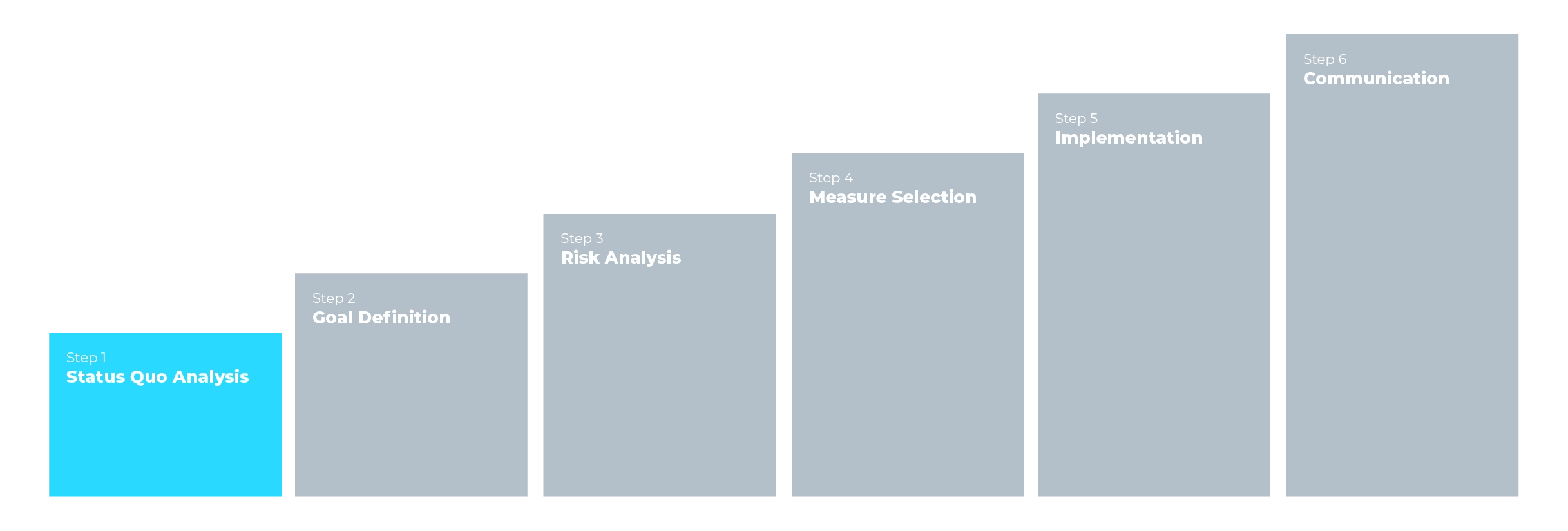
Strategic Assessment
Identify business-critical processes, products, and services: Analyze which areas are essential to your business model and where digital dependencies have the greatest impact (e.g., infrastructure, software, data, expertise).
Evaluate existing dependencies: Examine which external providers (e.g., cloud, SaaS, proprietary software) you depend on and how critical these dependencies are to your business.
Consider regulatory requirements: Take into account compliance requirements such as GDPR, NIS-2, DORA, and industry-specific guidelines.
More Digital Independence with Myra


IT security solutions made in Germany
Myra develops all security solutions in Germany, serving as a secure European alternative to US solutions.


Legally compliant with GDPR
Our solutions are legally GDPR-compliant and offer a comprehensive level of compliance for the most demanding requirements.


Data processing in Europe
At Myra, SSL/TLS termination is carried out exclusively in Germany or Europe at the customer's request.


PoPs in many European countries
We have many PoP locations throughout Europe, outside the jurisdiction of US laws such as the CLOUD Act or FISA Section 702.
This is how Myra compares to competitors in terms of digital sovereignty
Legally GDPR compliant (not subject to US CLOUD Act and FISA Section 702)
Option to exclusively process data in German data centers
Technology development in EU / Germany
Company management based in EU / Germany
EU / German law applies
Legally GDPR compliant (not subject to US CLOUD Act and FISA Section 702)
Option to exclusively process data in German data centers
Technology development in EU / Germany
Company management based in EU / Germany
EU / German law applies
Get in Touch – and Mitigate Any Risk
You have completed your sovereignty check – now you can take the next step toward strengthening your security and digital independence. Whether you need expert guidance, a personalized security consultation, or more details on our GDPR-compliant, sovereign solutions “Made in Germany,” we’re happy to help.
All inquiries will be handled promptly and in strict confidence.


With over 11 years of experience in IT security, we are the right partner for you.


Our business hours are Monday to Friday, 9 a.m. to 6 p.m. (CET).


Simplay fill out the contact form or use one of the other contact options.


FAQ: Data protection agreements, surveillance laws, and more.
Safe Harbor was a data protection agreement between the EU and the US that was in place from 2000 to 2015 and was intended to enable data transfers between the two regions. It was based on self-certification by US companies that committed to complying with certain data protection principles without any external monitoring. The European Court of Justice declared Safe Harbor invalid in 2015 because the level of data protection in the US was considered insufficient and EU citizens were not granted adequate legal protection (Schrems I).