New: AI Workspace – Secure AI for Organizations With Sensitive Data. Learn more.



MeinGPT Alternative for Regulated Organizations
MeinGPT offers a broad AI toolkit for chat, assistants, workflows, automation, data integration, and line-of-business use. Myra AI Workspace focuses on controlled AI usage in organizations with heightened security and compliance requirements: featuring centralized guardrails, mandatory PII masking, project-specific model limits, EU operations, and auditable evidence.
In short: MeinGPT is a good fit if you’re looking for a versatile AI platform with transparent provider communication, a public cost calculator, and a broad range of features. Myra AI Workspace is the better alternative if sensitive data, regulatory requirements, traceable data flows, and centralized AI governance are your top priorities.


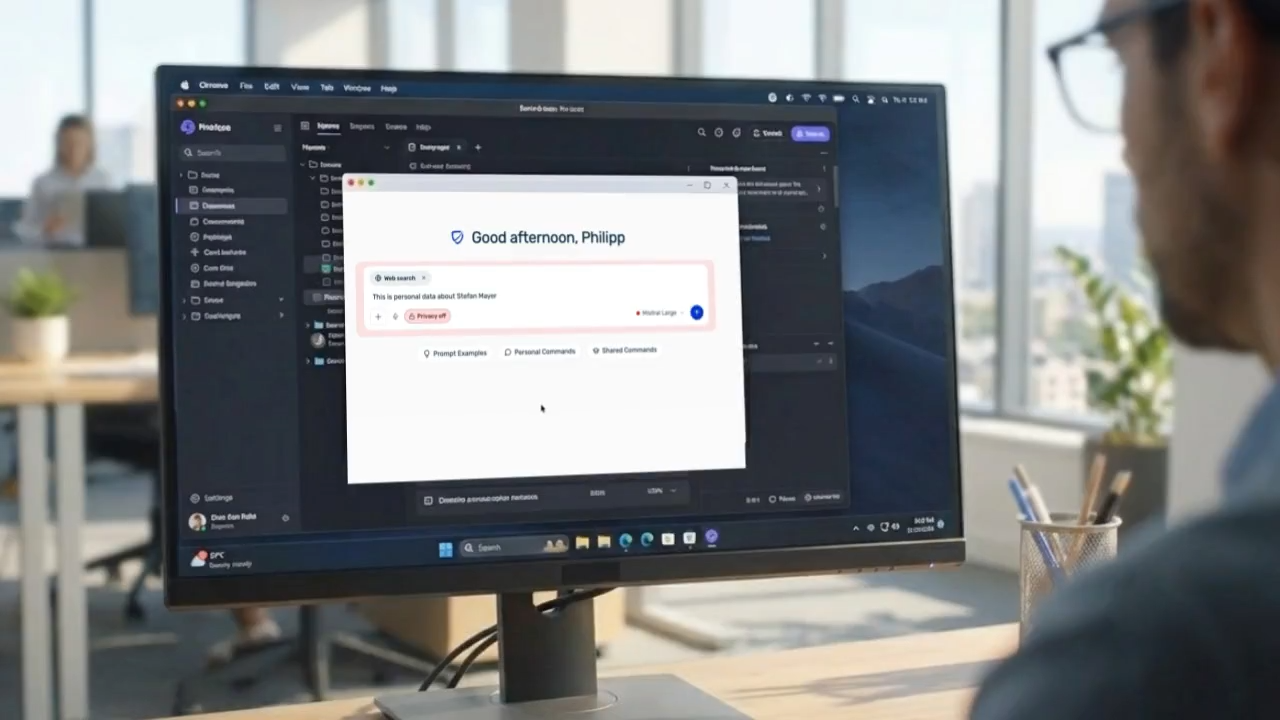



MeinGPT vs. Myra AI Workspace: 10 Criteria Compared
As of November 11, 2026. All information regarding MeinGPT is based on publicly available information from the provider, specifically the website, Trust Center, and documentation. The information regarding Myra AI Workspace is sourced from ai.myra.eu and the online documentation. Product features, model availability, pricing, and contract documents are subject to change; please verify the most current information directly with the respective provider before making a decision.
Provider & Operation
SelectCode GmbH, Unterhaching. According to the provider, the platform and data layer run on Hetzner infrastructure in Germany. The provider and the hosting provider are two separate companies .
Myra Security GmbH, Munich. Platform hosted on Myra’s own, certified EU infrastructure. The platform and infrastructure are managed by a single provider.
Models
According to the provider, with AVV 2.0, all models run within the EU, including via Azure OpenAI, OpenAI with EU data residency, Google Vertex AI, Mistral, AWS Bedrock, and Nebius. Open-source models are provided via European infrastructure, according to the provider.
Over 20 providers via an OpenAI-compatible endpoint. Open-weight models run on Myra’s own EU infrastructure, without being passed on to external model providers. The availability of Myra-hosted models depends on the scope of the contract.
Model Approval
Admins use model sharing to specify which models the workspace is allowed to use.
Additionally configurable per project: The “Local Only” access level allows only Myra models, without web search or external tools. Only the project owner can change this setting.
Data Protection / PII Protection
According to the provider, PII filters have been available upon request since November 1, 2026, and can be enabled on a per-workspace basis. Detection occurs on Hetzner’s own servers for both EU and non-EU models. According to the documentation, admins can specify which teams are allowed to disable the filter on a per-chat basis.
PII masking is built into the product and can be mandated organization-wide. German recognition features with checksum validation, e.g., for IBAN or tax ID. A preview shows before sending what will be automatically replaced by placeholders; manual additions are possible. Optional EU region routing rejects requests from outside the EU.
Guardrails
PII filters, usage policies, and approvals for tools and connectors.
Guardrail pipeline with regex, keywords, language restrictions, code detection, jailbreak detector, PII detector, and Prompt Guard. Possible actions: Block, mask, flag.
Roles & Identity
Three roles: Admin, Member, Viewer. According to the provider, individual tools cannot be enabled on a per-role basis. Provisioning via Entra ID using SCIM.
Multi-tenant capability, RBAC with custom roles, groups, and departments. Guardrails at the organizational, team , and user levels. SSO via OIDC or SAML, SCIM.
Audit & Audit Trail
Log of changes to security and privacy settings, including who, when, what value, IP, and browser; excludes chat content. Unlimited retention, export as CSV or JSON.
Audit log for administrative changes and security events, tamper-evident via a cryptographic hash chain. Organization admins can retrieve it themselves and export it as CSV. Standard retention period: 365 days. Read access to stored prompts is logged along with the reason. Forwarding to SIEM systems is possible.
Cost Control
Prepaid credit, public cost calculator. Usage limits per usage tier, broken down by text, images, API, and other features.
Budgets at three levels, with costs broken down by team, model, and user. A cache can reduce costs for repeated requests.
Contract & Documentation
Data Processing Agreement (DPA) 2.0.1 publicly available as a PDF; public registry of subcontractors. ISO certificate and penetration test report available upon request.
AVV 1.1.1 dated August 21, 2026. Processing generally takes place within the EU/EEA. A model outside the EU/EEA will only be used following selection and prior consent by the client, secured via EU Standard Contractual Clauses. New subcontracted processors will be announced at least 30 days in advance, with the right to object. Current list available at ai.myra.eu/trust.
When is which option suitable?
Well-suited for organizations that prioritize an independent review without a sales meeting, a public cost calculator, mandatory employee training, and numerous use cases in the SME sector.
Particularly suitable for organizations with sensitive data and regulatory obligations (e.g., NIS-2), such as those in the finance, healthcare, public sector, or KRITIS sectors. A strong fit when model limits per project, centralized guidelines, and traceable data flows are important.
Provider & Operation
SelectCode GmbH, Unterhaching. According to the provider, the platform and data layer run on Hetzner infrastructure in Germany. The provider and the hosting provider are two separate companies .
Models
According to the provider, with AVV 2.0, all models run within the EU, including via Azure OpenAI, OpenAI with EU data residency, Google Vertex AI, Mistral, AWS Bedrock, and Nebius. Open-source models are provided via European infrastructure, according to the provider.
Model Approval
Admins use model sharing to specify which models the workspace is allowed to use.
Data Protection / PII Protection
According to the provider, PII filters have been available upon request since November 1, 2026, and can be enabled on a per-workspace basis. Detection occurs on Hetzner’s own servers for both EU and non-EU models. According to the documentation, admins can specify which teams are allowed to disable the filter on a per-chat basis.
Guardrails
PII filters, usage policies, and approvals for tools and connectors.
Roles & Identity
Three roles: Admin, Member, Viewer. According to the provider, individual tools cannot be enabled on a per-role basis. Provisioning via Entra ID using SCIM.
Audit & Audit Trail
Log of changes to security and privacy settings, including who, when, what value, IP, and browser; excludes chat content. Unlimited retention, export as CSV or JSON.
Cost Control
Prepaid credit, public cost calculator. Usage limits per usage tier, broken down by text, images, API, and other features.
Contract & Documentation
Data Processing Agreement (DPA) 2.0.1 publicly available as a PDF; public registry of subcontractors. ISO certificate and penetration test report available upon request.
When is which option suitable?
Well-suited for organizations that prioritize an independent review without a sales meeting, a public cost calculator, mandatory employee training, and numerous use cases in the SME sector.
When Is MeinGPT the Right Choice, and When Is Myra AI Workspace?
Both platforms are designed for organizations that want to use AI in a more controlled manner than with the original chat tools provided by LLM vendors. The difference lies less in the basic concept and more in the focus and depth of governance.
MeinGPT is well-suited when:
a broad toolkit for line-of-business departments is a priority,
chat, assistants, workflows, automation, and meeting features need to be centrally bundled,
a public cost calculator and publicly available contract documents are intended to facilitate the initial evaluation,
employee training requirements are a priority,
specialized departments need to get started quickly with many different use cases.
Myra AI Workspace is well-suited when:
sensitive or regulated data is processed,
model access needs to be restricted on a project-by-project basis,
PII masking must be mandatory organization-wide,
guardrails need to apply centrally to chat, projects, and API usage,
auditability, SIEM integration, and security compliance are relevant,
the number of vendors involved in the data path should be kept as low as possible.



What Are the Differences Between MeinGPT and Myra AI Workspace?
Fewer Parties Involved in the Data Path
With Myra, the platform and infrastructure are both managed by a single company. If you use an open-weight model on Myra’s infrastructure, no additional external model provider is involved: processing then takes place entirely within the infrastructure operated by Myra.
With MeinGPT, SelectCode operates the platform on Hetzner infrastructure, according to the provider. Open-source models run via Ubicloud in Hetzner data centers, while other models run via providers such as Microsoft Azure or Google. Both configurations are common; your processing inventory must accurately map the respective data chain.
Model Limits per Project
MeinGPT shares models across the entire workspace, with teams, or with individual users. Myra AI Workspace additionally sets limits on a per-project basis. A “Tax Files” project with the “Local Only” access level works exclusively with Myra models, even if the same person is permitted to use an external model in another project. Only the project owner can change the access level. This allows different data classes, departments, or regulatory requirements to be separated within a single client.
Policies Apply Centrally
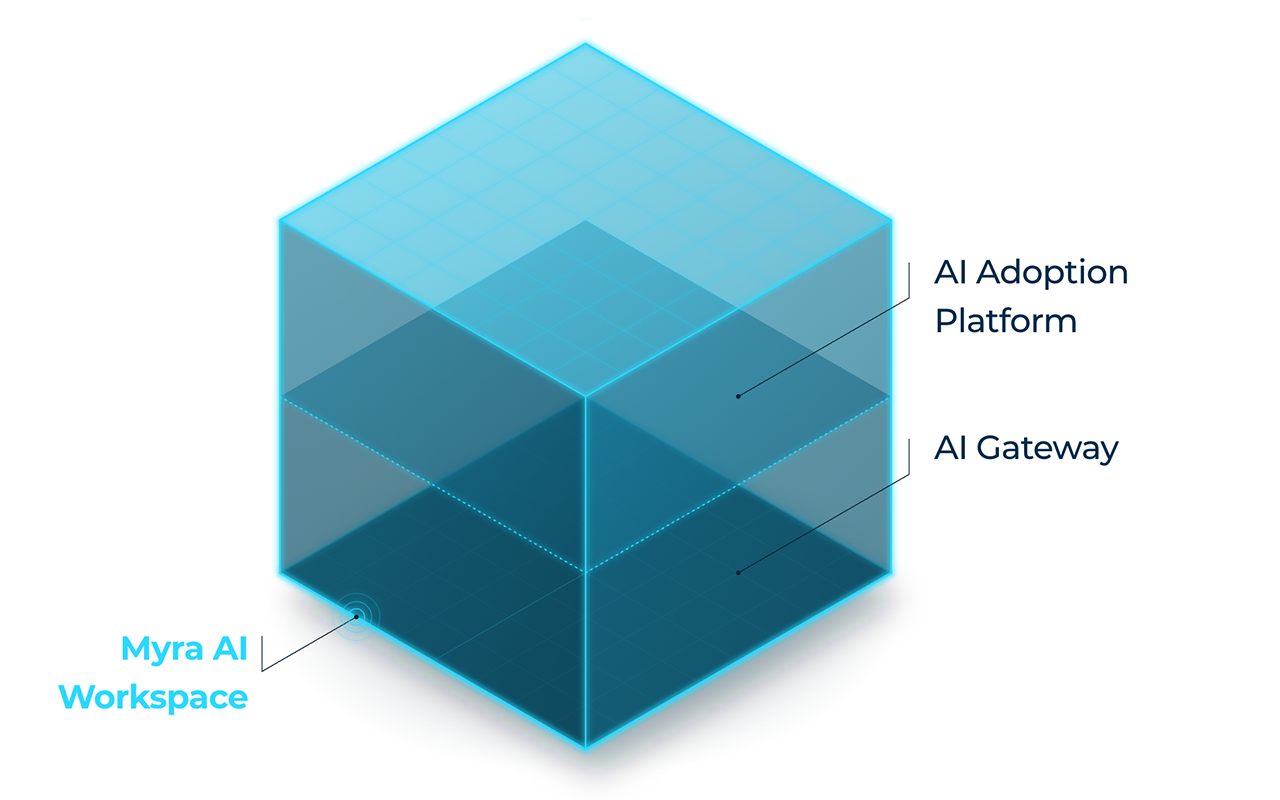
Every request in Myra AI Workspace passes through the AI Gateway, regardless of whether it comes from the chat, a project, or via the API. Guardrails and PII rules are configured centrally once and apply to organizations, teams, or individual users.
With EU region routing enabled, the gateway rejects requests to endpoints outside the EU before the provider is called. This allows technical policies to be enforced directly within the data flow.
Audit Trails Remain Verifiable
A cryptographic hash chain secures the audit log in Myra AI Workspace, ensuring that subsequent changes or gaps are detectable. Organization admins export the log themselves; the hash values of the chain are included in the export.
Anyone wishing to view saved prompts must provide a reason, and this access is also logged. This is relevant for organizations with audit requirements because administrative interventions and security-related events can be documented in a traceable manner.


Five Questions to Ask Every Provider Before Making a Decision
Ask the same questions of all providers you’re evaluating and insist on written answers. Verbal assurances are of little help during the next audit.
Which models are approved for my tenant, and where does each one run?
Who operates the servers for the platform and models, and what is the scope of the respective audit report?
When does PII masking become active in my tenant, and can I make it mandatory for everyone?
Where can I find the current list of subcontractors, and how will I be notified of any changes?
As a person bound by professional secrecy, do I need an agreement under Section 203 of the German Criminal Code (StGB), and is such an agreement in place?
Additionally, you should check:
Are there separate guidelines for different teams, projects, or data classes?
Are administrative changes fully logged?
Can logs be exported and transferred to a SIEM?
How are model discontinuations communicated?
What data can be exported at the end of the contract?



Frequently Asked Questions (FAQ) about MeinGPT Alternatives
Myra AI Workspace is suitable for organizations that need to set model boundaries on a per-project basis and enforce policies centrally. The platform, infrastructure, and open-weight models can be operated at Myra Security in Munich. For regulated organizations, PII masking, guardrails, audit logs, and controllable data flows are particularly relevant.