New: AI Workspace – Secure AI for Organizations With Sensitive Data. Learn more.

IT Security for Public Authorities

For federal, state and local authorities, Myra offers customized cybersecurity concepts that are tailored to the specific requirements of the public sector. Our advanced defense mechanisms provide robust protection against complex digital attacks. In addition, Myra's powerful performance solutions optimize administrative processes so that authorities and public institutions benefit from increased security without sacrificing efficiency or functionality.

Trusted by CISOs

Logo Stadt RegensburgLogo Staatsministerium Baden-WürttembergMunich Security ConferenceG7 GermanyLogo Stadt HeilbronnAKDB LogoLogo of KDVZ, German municipal IT service provider and customer of Myra Security
CYBERSECURITY

How IT Security Helps Public Authorities

E-government and digital citizen services require a secure IT infrastructure in public authorities. Inadequate IT security, on the other hand, can jeopardize the functionality of entire administrations.

According to studies by Allianz, cyber incidents are the biggest risk for the public sector. For some years now, politically motivated cyber actors in particular have been increasingly targeting the websites, portals and online interfaces (APIs) of public authorities to attract attention and spread concern among the citizens. In March 2024, for example, a massive wave of DDoS attacks hit hit French government websites.

Public authorities can strengthen their digital resilience through effective IT risk management and the implementation of comprehensive security measures. The BSI recommends the use of security management systems, regular penetration tests and employee awareness training to ensure the continuity of important administrative processes.

People working in office

Critical-Infrastructure-Proven Protection Systems for Public Authorities

Icon DDoS Schutz

DDoS Protection

Myra automatically detects and blocks malicious traffic, keeping your applications available even under heavy DDoS attacks.

Learn more
Icon WAF

Web Application Firewall

The Myra Web Application Firewall detects and blocks suspicious activity in real time, protecting against known exploits and zero-day vulnerabilities.

Mehr erfahren
Icon Global CDN

CDN

With a global network of strategically placed servers, Myra delivers your content fast and with low latency.

Mehr erfahren
REGULATORY

IT-Compliance als regulatorische Herausforderung

Setting up IT security for public authorities requires enormous expertise. In public administration, the regulatory requirements for digital systems and processes are considerable. The requirements of the IT Security Act 2.0 and the BSI standards must be observed in order to secure IT in line with compliance requirements. The General Data Protection Regulation (GDPR) and the NIS2 Directive for federal authorities must also be taken into account.

Overall, these regulatory directives require the affected administrative units to regularly demonstrate compliance with strict protection guidelines and to ensure the integrity, availability, authenticity, and confidentiality of data and processes. The Federal Office for Information Security (BSI) plays a central role in identifying IT security risks and supporting the federal, state and local authorities.

Bundestag exterior view
cyber threats for authorities

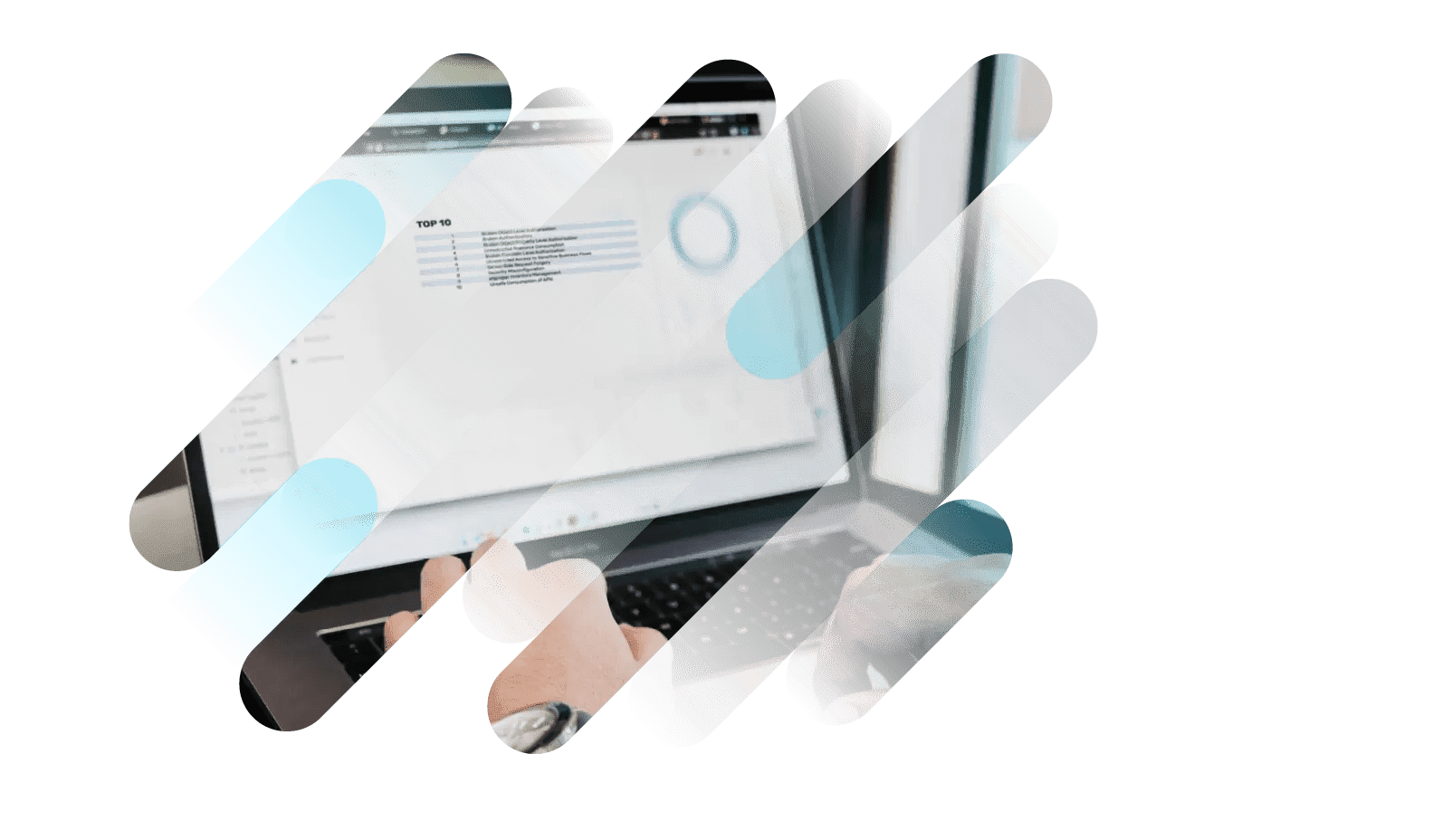
OWASP Top 10

The OWASP Top 10 is a list of the ten most critical security risks for web applications, which is compiled and regularly updated by the Open Web Application Security Project (OWASP) Foundation. They serve as an important document for developers and security experts to find out about the most common and most dangerous security vulnerabilities in web applications.

cyber threats for authorities

DDoS Attack

In a distributed denial of service (DDoS) attack, attackers direct artificial traffic to the IT infrastructures, web applications or online APIs of authorities. As a result, the affected services are slowed down or fail completely. The problems continue until the attacker ends the attack or the affected organization takes appropriate countermeasures.

DDoS attacks
cyber threats for authorities

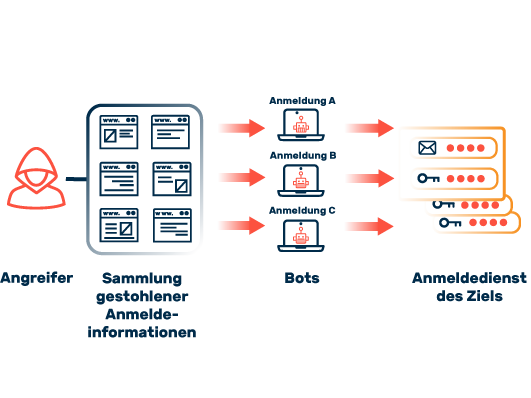
Credential Stuffing

The systematic misuse of access data through credential stuffing is one of the most frequently used methods of attack by cybercriminals against authorities. Above all, trading the stolen information is a lucrative source of income for attackers.

Sequence of an attack by means of credential stuffing
cyber threats for authorities

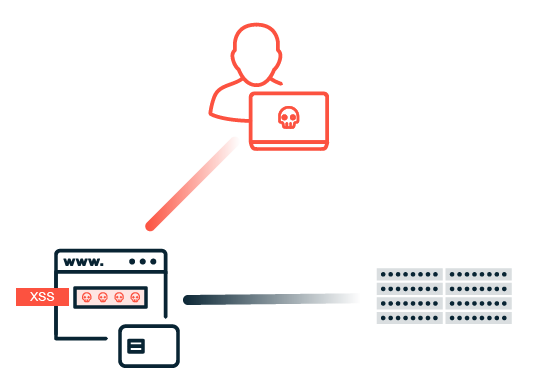
Cross-Site Scripting (XSS)

In an XSS attack, cybercriminals inject malicious code into web applications by exploiting security vulnerabilities. XSS attacks allow attackers to gain control of a victim's browser, steal sensitive data such as cookies or login information and potentially compromise the entire user account.

Cross-Site Scripting (XSS)
cyber threats for authorities

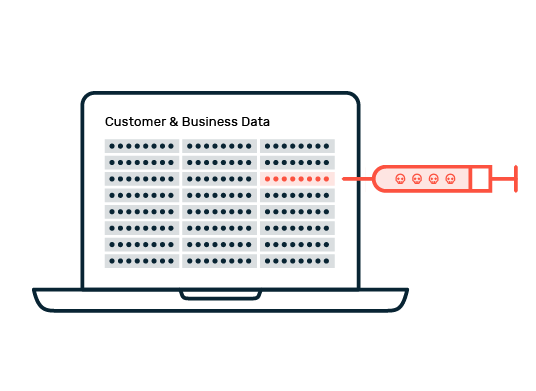
SQL Injection

In an SQL injection attack, cybercriminals specifically exploit security vulnerabilities to inject manipulated commands or malicious code via input masks, for example. The attackers aim to manipulate the underlying database and gain unauthorized access to confidential information.

SQL Injection
cyber threats for authorities

Zero-Day Exploits

Zero-day exploits are security gaps in software or hardware that are still unknown to the manufacturer and for which there are no patches yet. These vulnerabilities are exploited by attackers to compromise systems, often before the affected companies have even found out about the gap. Nevertheless, there are suitable solutions for taking appropriate countermeasures promptly until the necessary updates are available.

cyber threats for authorities

Cross-Site Request Forgery (CSRF)

Attackers trick the user's browser into sending manipulated HTTP requests to a website or web application to trigger unwanted actions. This is done, for example, by sharing manipulated links or by visiting malicious websites, which in turn execute an HTTP request in the context of the existing user session.

Cross-Site Request Forgery (CSRF)
cyber threats for authorities

OWASP Top 10

The OWASP Top 10 is a list of the ten most critical security risks for web applications, which is compiled and regularly updated by the Open Web Application Security Project (OWASP) Foundation. They serve as an important document for developers and security experts to find out about the most common and most dangerous security vulnerabilities in web applications.

cyber threats for authorities

DDoS Attack

In a distributed denial of service (DDoS) attack, attackers direct artificial traffic to the IT infrastructures, web applications or online APIs of authorities. As a result, the affected services are slowed down or fail completely. The problems continue until the attacker ends the attack or the affected organization takes appropriate countermeasures.

DDoS attacks
Penalties

Consequences of cyber incidents

Authorities and public bodies in Germany are exempt from direct fines for breaches of the General Data Protection Regulation (GDPR). This is based on a special provision in Art. 83 (7) GDPR, which allows EU member states to refrain from imposing fines on public bodies. Instead, competent supervisory authorities can impose alternative sanctions, such as orders to cease infringements, instructions to adapt data processing or temporary or permanent bans on certain data processing.

Despite the lack of fines, data protection violations have significant consequences for public authorities and those responsible for them. These include public pressure through transparent reporting, individual sanctions against responsible persons in the event of deliberate violations, consequences under employment law for managers and, in serious cases, even criminal prosecution. There is also the possibility of claims for damages by those affected.

Person works on two laptops

Fortify Your Digital Defenses With Myra

4 key areas – 1 outstanding technology

Icon radar

Security

Avoid data theft, system outages, and disrupted communications. Our robust defense system protects your critical processes with unwavering vigilance.

Icon Performance

Performance

Experience high-performance delivery of your content, even during traffic peaks. Maintain optimal performance and provide your users with a seamless experience.

Icon Compliance

Business Continuity

Myra ensures the utmost protection for your business by utilizing direct and geo-redundant connections to your infrastructure, without relying on external factors.

Icon Certificate Management

Compliance

Meet the requirements of IT security and data protection teams with ease. Myra is your trusted partner, offering unrivaled expertise in the strictest compliance regimes.

Designed and engineered for highly regulated sectors

Certified Security from Myra: Compliance Without Compromise

  • ISO 27001 on the basis of IT-Grundschutz (BSI)

  • Payment Card Industry Data Security Standard (PCI DSS)

  • BSI C5 Type 2

  • KRITIS Proof according to § 8a para. 3 BSIG

  • Trusted Cloud Service

  • IDW PS 951 Type 2 (ISAE 3402)

  • VS-NfD

Certificate ISO 27001 BSI certified on the basis of IT-GrundschutzCertificate PCI DSSBSIG KRITIS qualified logoBSI C5 Testat Typ2Zertifikat Trusted CloudIDW WPS 951 Type 2 Certificatebrandeins best IT-security provider 2024 certificate
Our Customers

Digital Crisis Support: Managing Extreme Peak Loads

Especially in exceptional social situations, it is essential that millions of citizens can access the official websites and apps of the government and authorities, e.g. the BZgA, at any time. Thanks to Myra technology, these sites run with high performance even in exceptional circumstances, enabling millions of parallel accesses.

Do you have
questions?

Please contact us via contact form or call us at:
+49 89 414141 - 345.

All information on data processing can be found in our privacy policy.

FAQ: IT Security for Public Authorities

NIS2 attaches great importance to security in the digital supply chain. Authorities and public institutions at federal level must therefore ensure that their service providers and suppliers also comply with cybersecurity standards. This means that public administrations must not only protect their own systems and processes, but also pay attention to securing their partners and service providers to keep an eye on the entire supply chain. Against this background, the selection of reliable partners with the necessary expertise in the public sector and the corresponding evidence in the form of relevant certifications and test certificates such as ISO 27001 or BSI C5 is of great importance.